Rhythm of Hanoi
There’s a moment in Hanoi when you realize that what looks like chaos is actually something else entirely. Scooters stream past from every direction, horns sounding constantly, cars inch forward into impossible gaps — and yet everything keeps moving.
At first it feels overwhelming. Then, almost without noticing, it begins to make sense. The air carries the scent of street food and exhaust, neon signs and shopfronts glow in reds and golds, and the steady chorus of engines and horns becomes part of the background, as constant as a heartbeat.
You step off the curb, hesitate for just a second, and then keep walking. The traffic doesn’t stop — it adjusts. It flows around you.
That’s when Hanoi begins to reveal itself — not as chaos, but as rhythm.
From the seat of a pedicab at night, you don’t just watch Hanoi—you move with it. The streets slide past on both sides, sidewalks crowded with people, storefronts glowing, scooters weaving in and out of the flow. The sound is constant—engines, horns, voices—but it never rises to panic. Everything feels close, almost too close, yet nothing collides.
What looks impossible at first begins to feel natural. The motion isn’t random—it’s shared. Every driver, every pedestrian, every rider seems to understand the rhythm without ever needing to explain it.
From above, the chaos disappears. Looking down on a busy intersection, what felt unpredictable at street level suddenly reveals its pattern. Scooters fan out in every direction, weaving, merging, adjusting—never quite in lanes, but never colliding.
There are no clear signals guiding it, no visible order, and yet it works. The movement is constant, fluid, almost like watching a school of fish shift and turn as one. What seemed overwhelming from the street becomes something else entirely from above—precision hidden inside motion.
Then, suddenly, color cuts through it all. A bicycle drifts through traffic carrying a cluster of balloons—bright reds, yellows, and blues floating above the scooters and headlights. In a city defined by motion, she moves with the same quiet confidence as everything around her, slipping effortlessly into the flow.
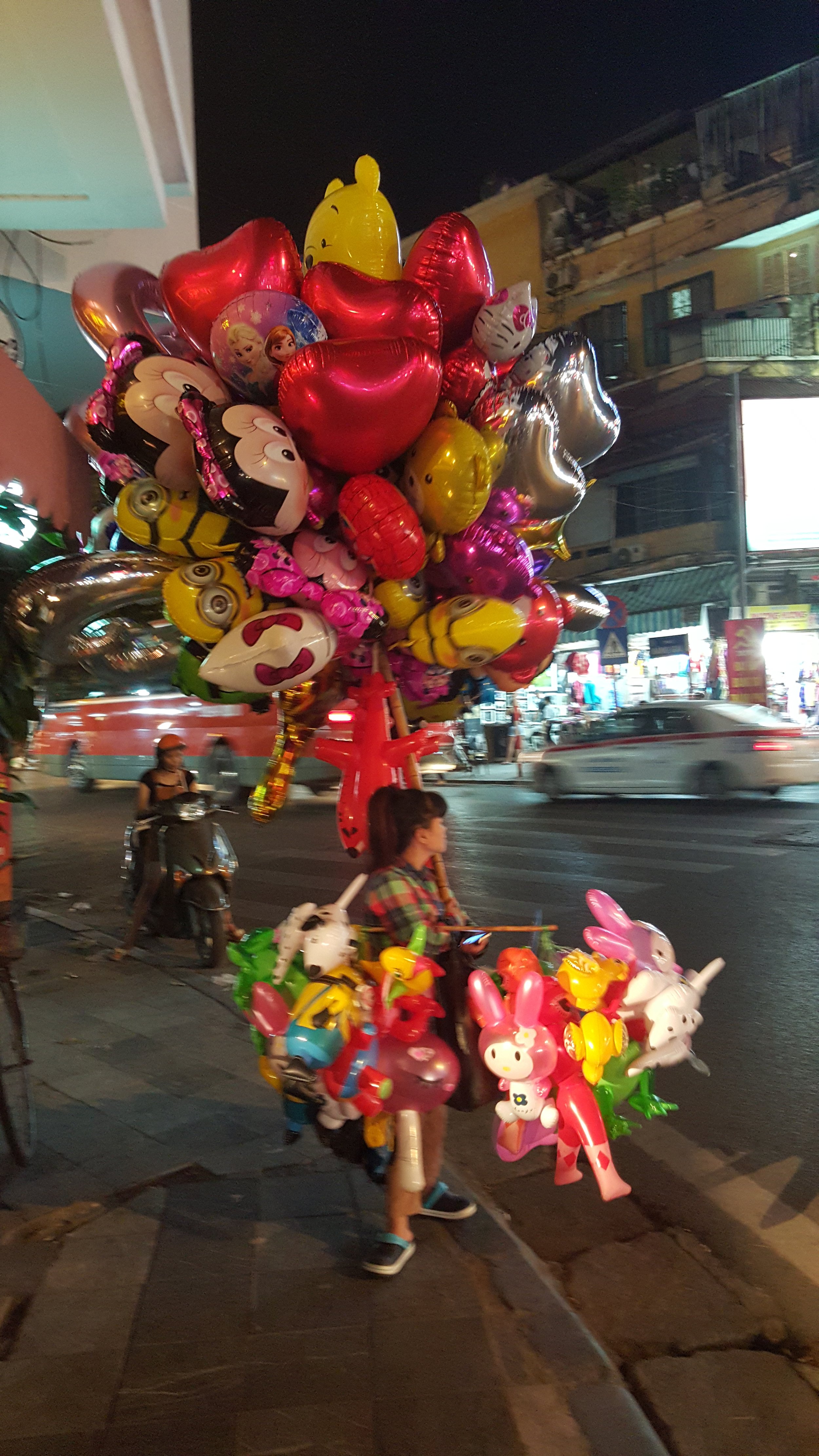
On the sidewalk, another vendor waits, the same explosion of color rising above the crowd. For a moment, the noise and movement fade into the background. What stands out instead is something simple and human—someone selling a small piece of joy in the middle of it all.
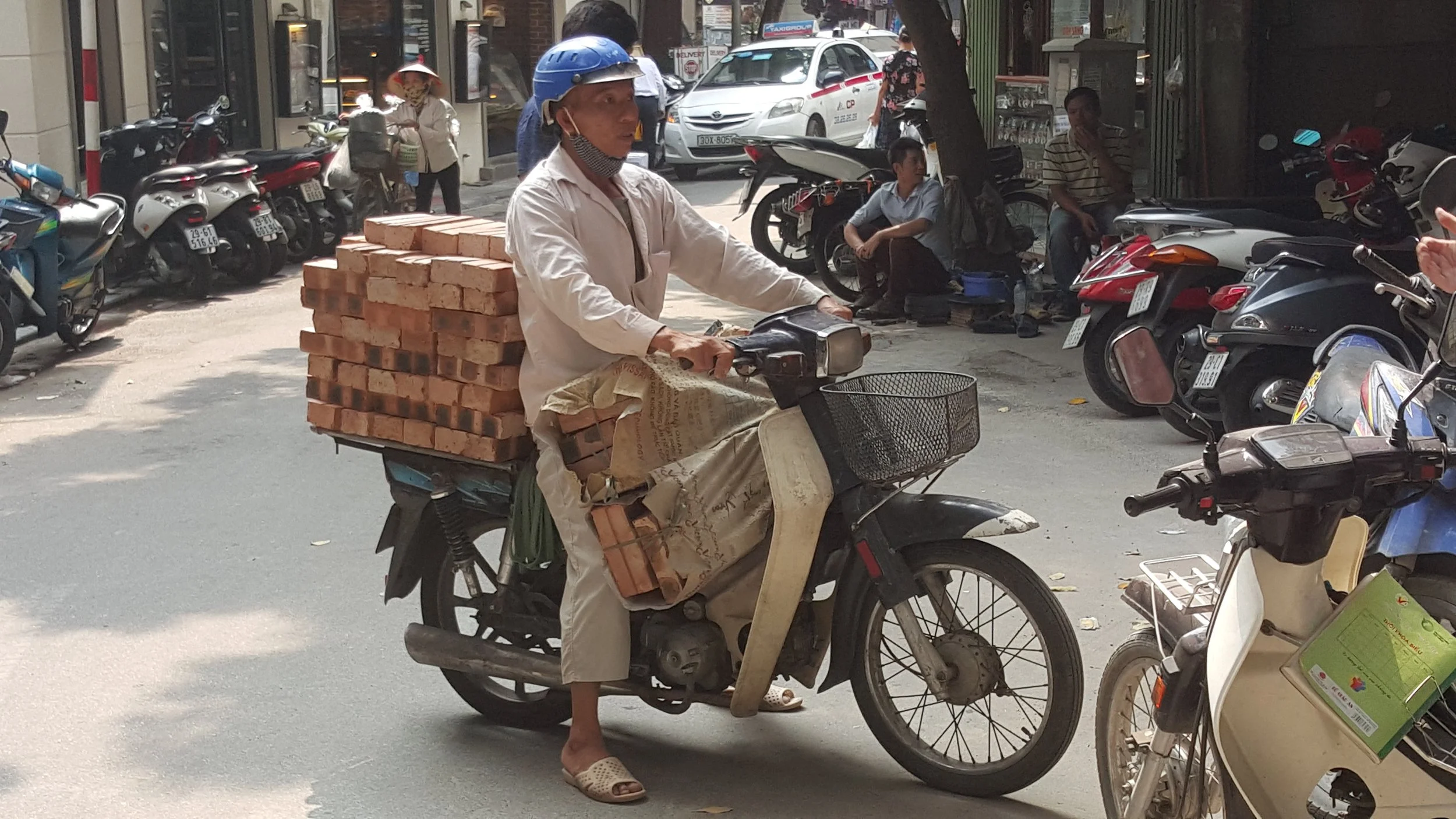
Then you start to notice what the scooters are carrying. One rider passes with what looks like an impossible load—dozens upon dozens of loose bricks stacked high on the rear rack, swaying slightly with every turn. More material is packed between his legs on the floorboard, leaving just enough space to steer.
It seems like too much—too heavy, too unbalanced—but he moves through traffic the same as everyone else, adjusting, flowing, never stopping. In Hanoi, even construction becomes part of the rhythm.
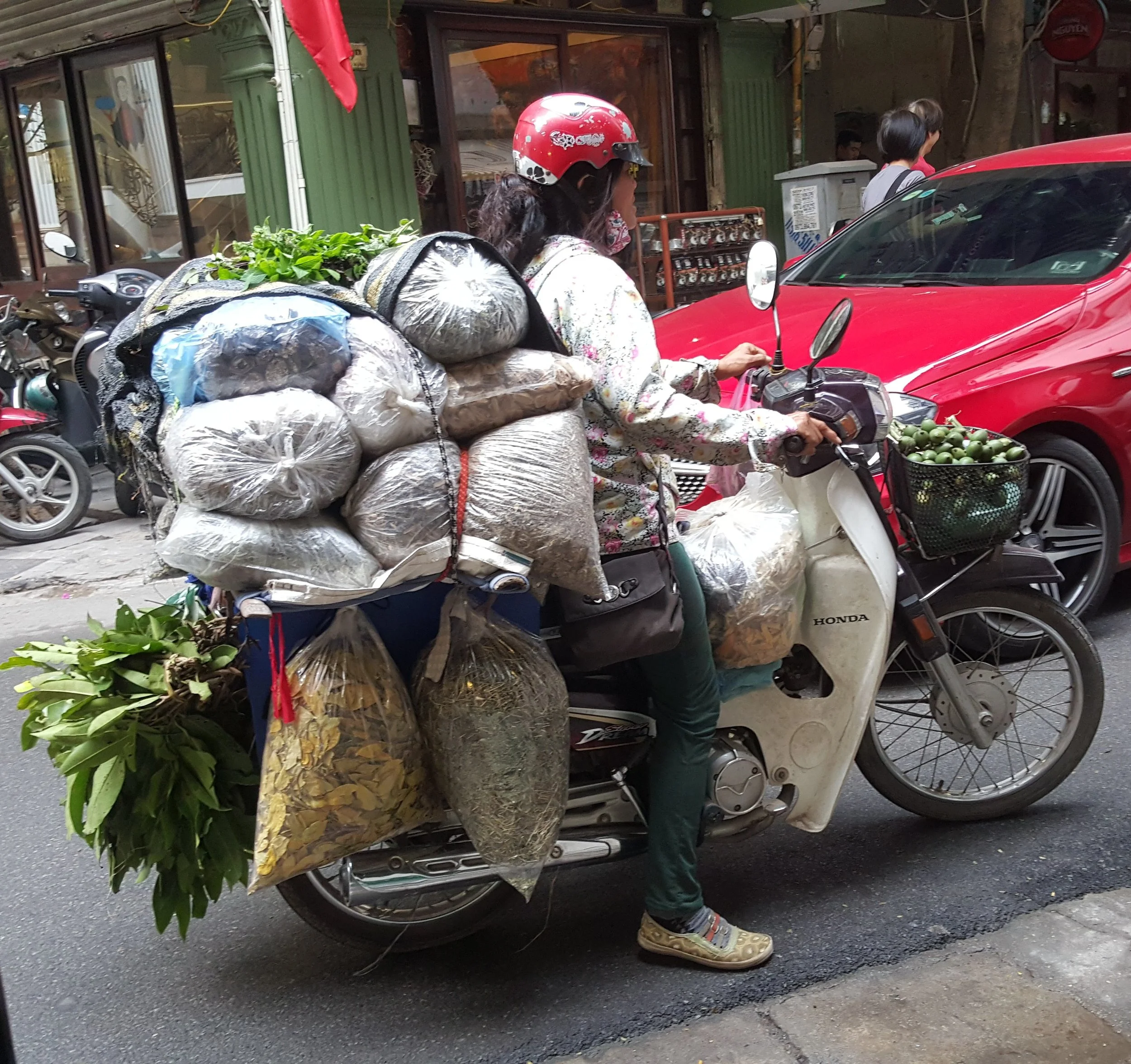
Not every load is heavy—some are simply essential. Another scooter passes carrying bundles of herbs and fresh vegetables, stacked just as high but lighter, spilling outward in every direction. Greens, roots, and baskets of food move through the same streets, headed toward markets and kitchens across the city.
Whether it’s bricks or produce, everything travels this way. The scooters don’t just carry people—they carry the daily life of Hanoi itself.
Then the city changes again. In open parks and along the lakes, the noise softens and the pace slows. Groups gather in the early light and late afternoon, moving together through music and motion—something like Zumba, laughter mixed with rhythm, a shared energy that feels both organized and completely natural.
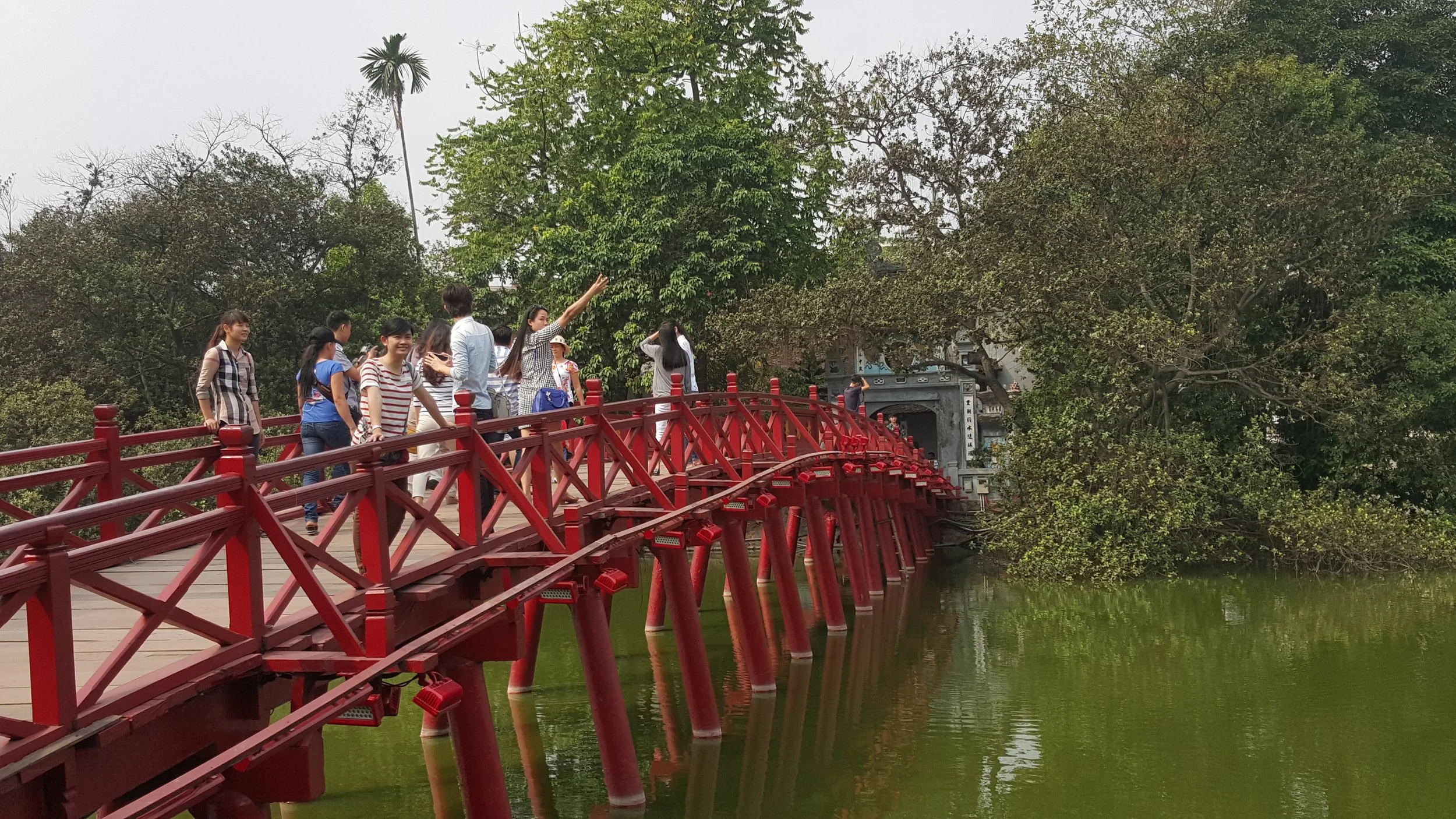
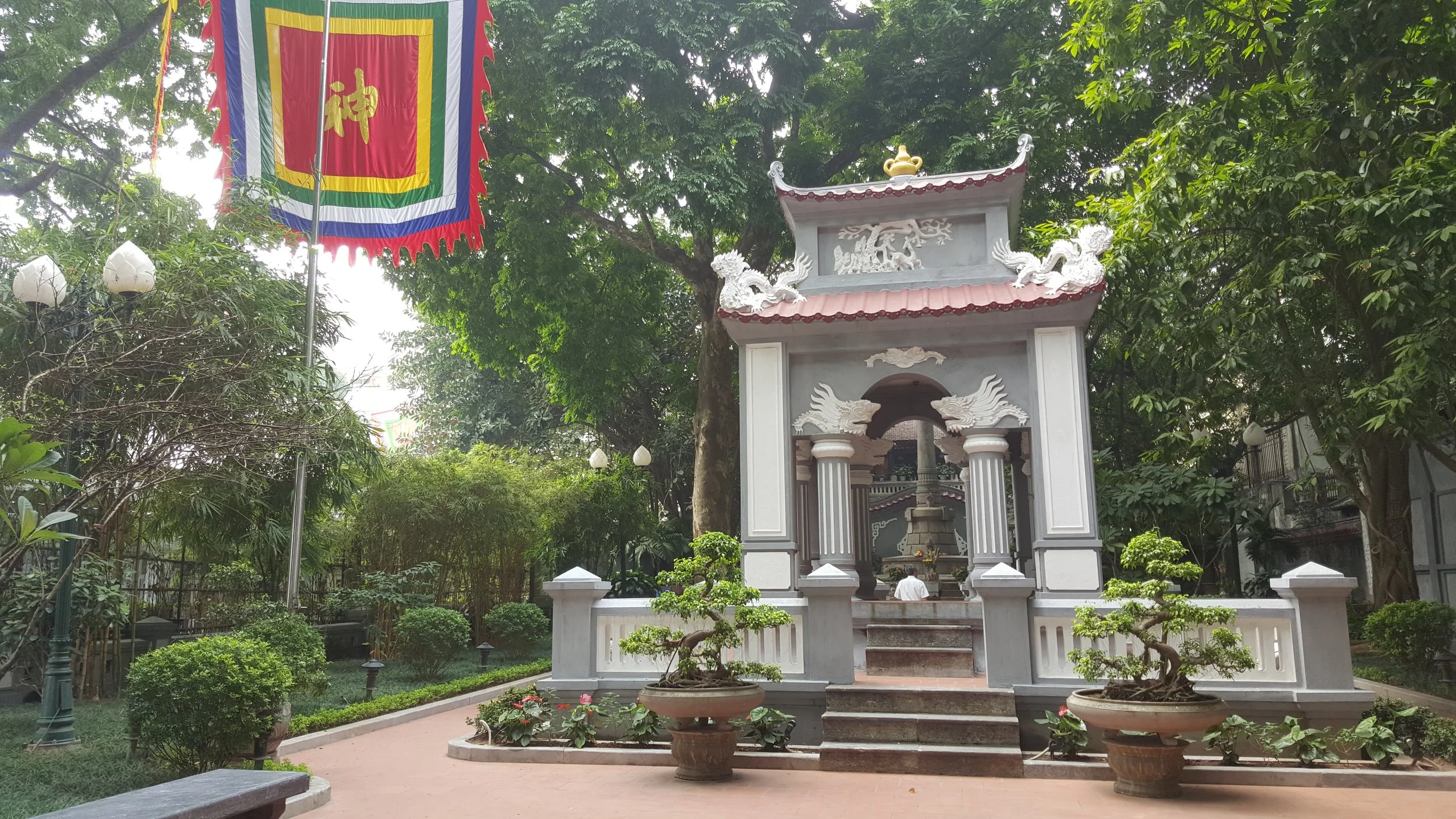
Just a short walk away, the scene shifts. A quiet lake reflects the trees and sky, people strolling along the edges, others sitting or stretching in the shade. The same city that moments ago felt fast and crowded now feels calm, almost unhurried.
It’s all part of the same rhythm—movement and stillness, side by side.
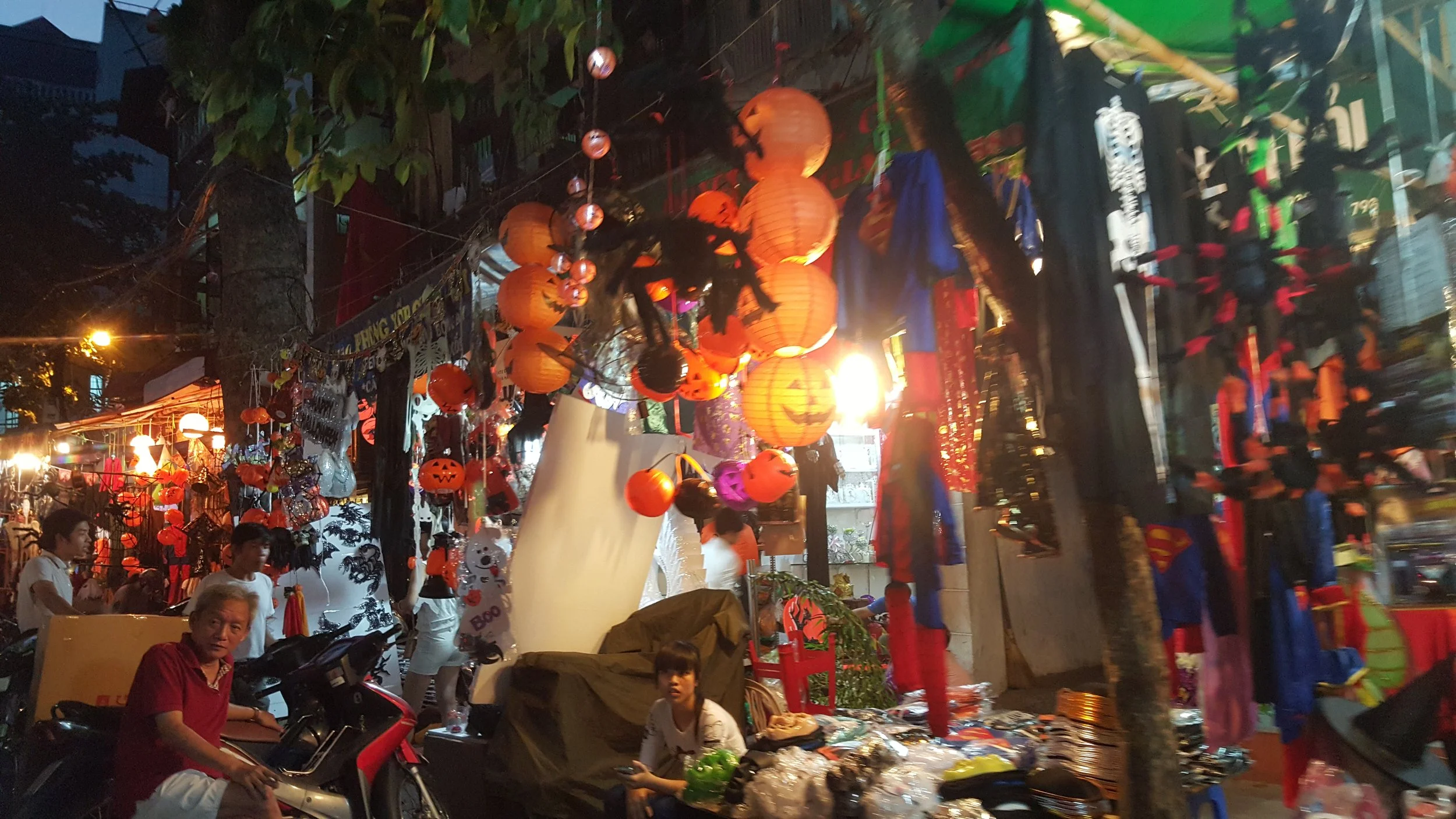
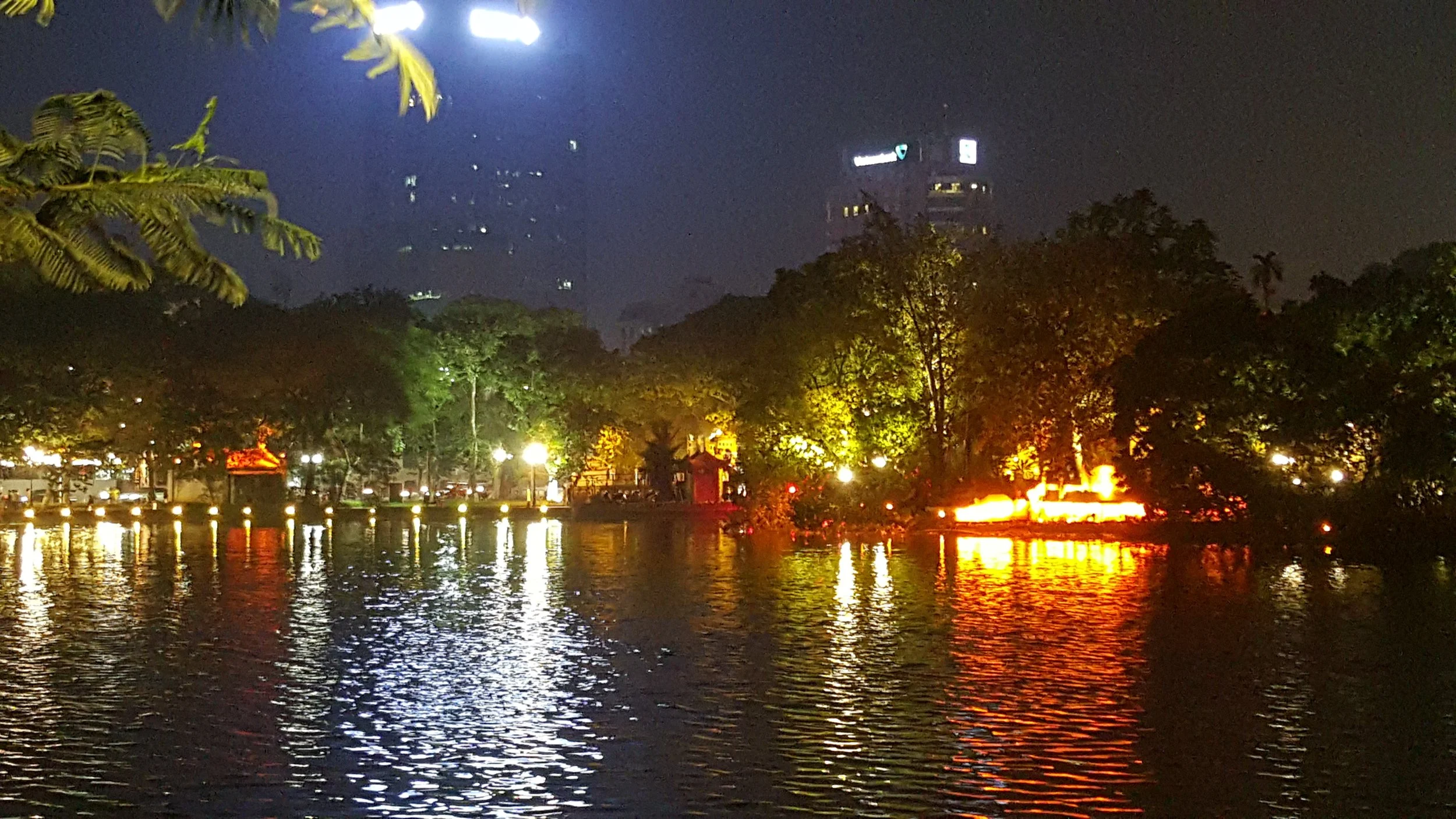
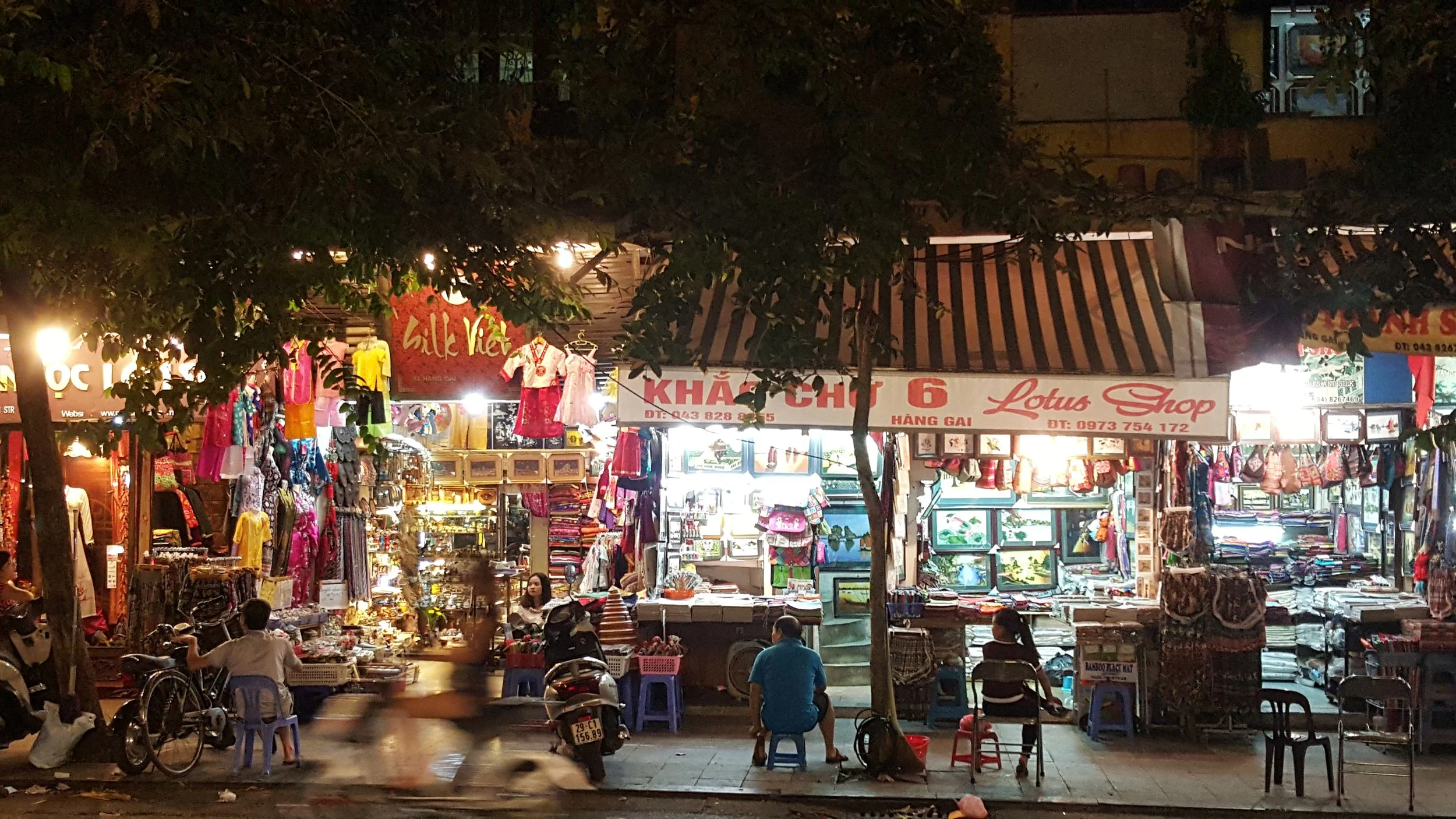
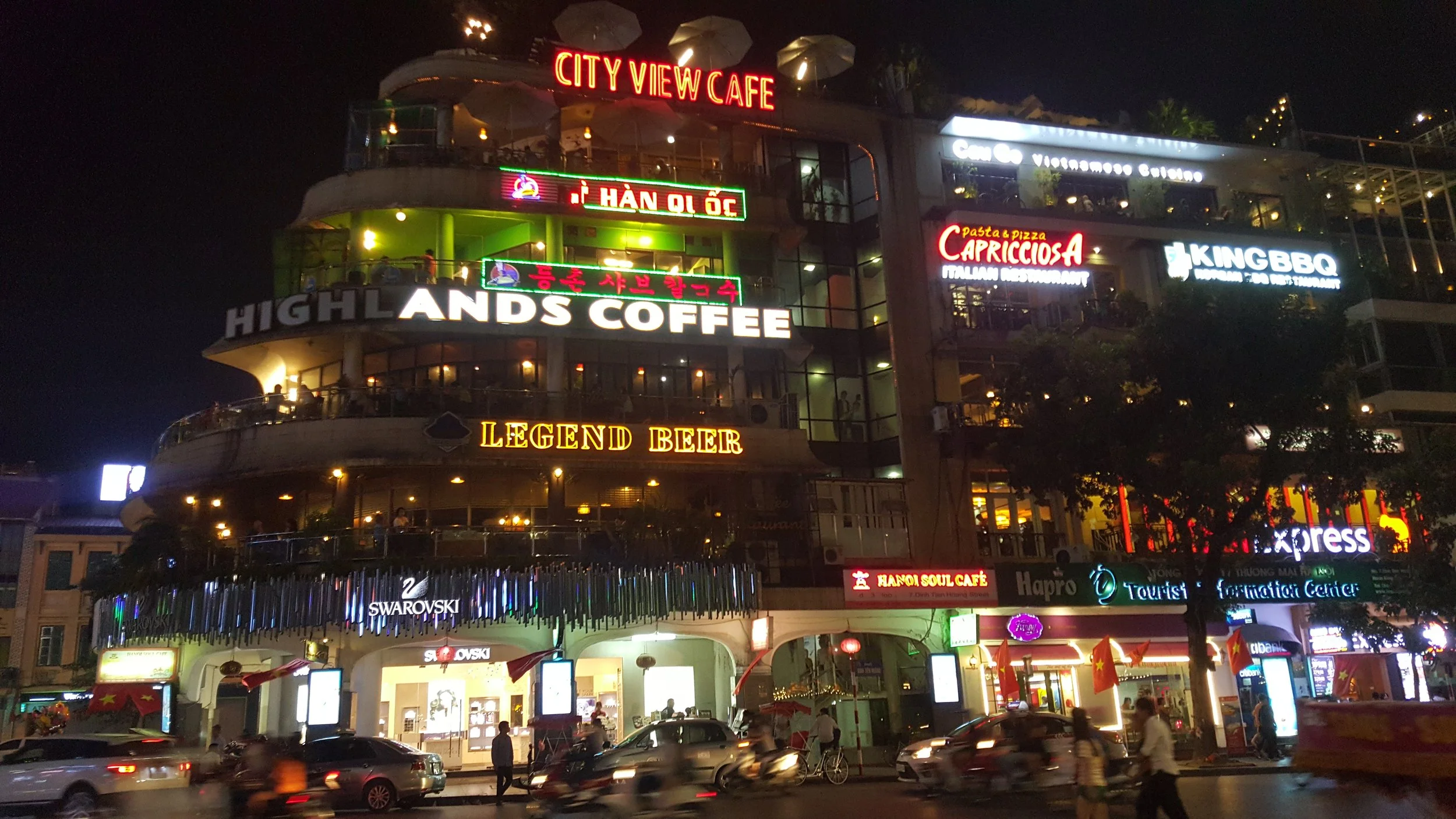
And in between it all are the moments you don’t plan for. Street vendors working under soft lights, buildings glowing against the night, small scenes that pass quickly but stay with you. Nothing dramatic, nothing staged—just everyday life unfolding in its own way.
These are the details that complete the picture. Not separate from the rhythm of Hanoi, but part of it.
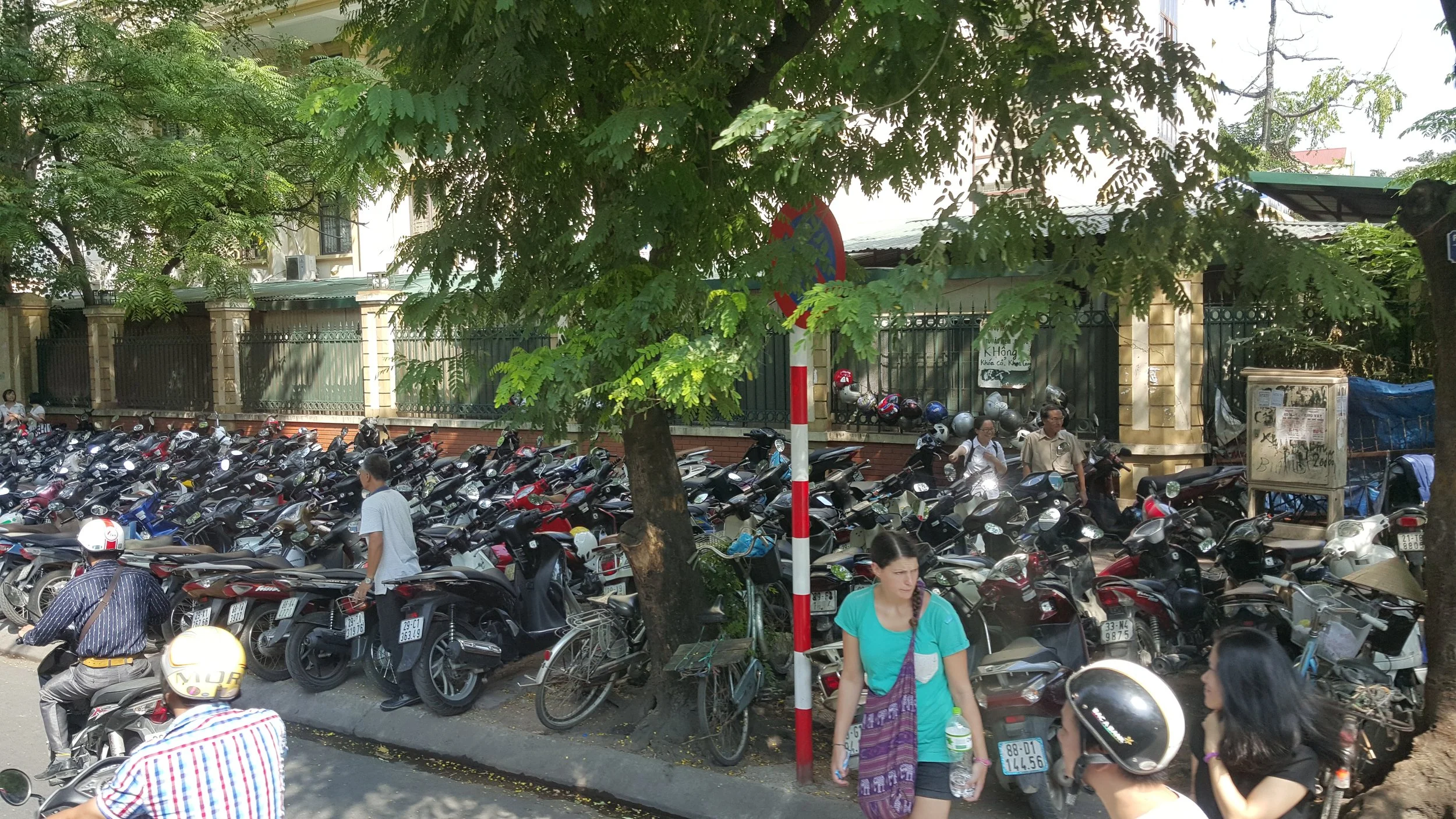
And then there’s the parking lot—rows of identical scooters, stretching farther than you expect. Finding yours feels like part of the experience.
