Walking With Dragons
There are places in the world that feel untouched, not because no one has been there, but because nothing about them has changed.
Komodo is one of those places.
Standing there alone, it doesn’t take long to realize this isn’t just another stop on a trip. The heat feels heavier. The air is still. And somewhere nearby, unseen but very much present, is a dragon.
They are not in cages. There are no barriers. No guarantees. Only distance - and sometimes not much of that.
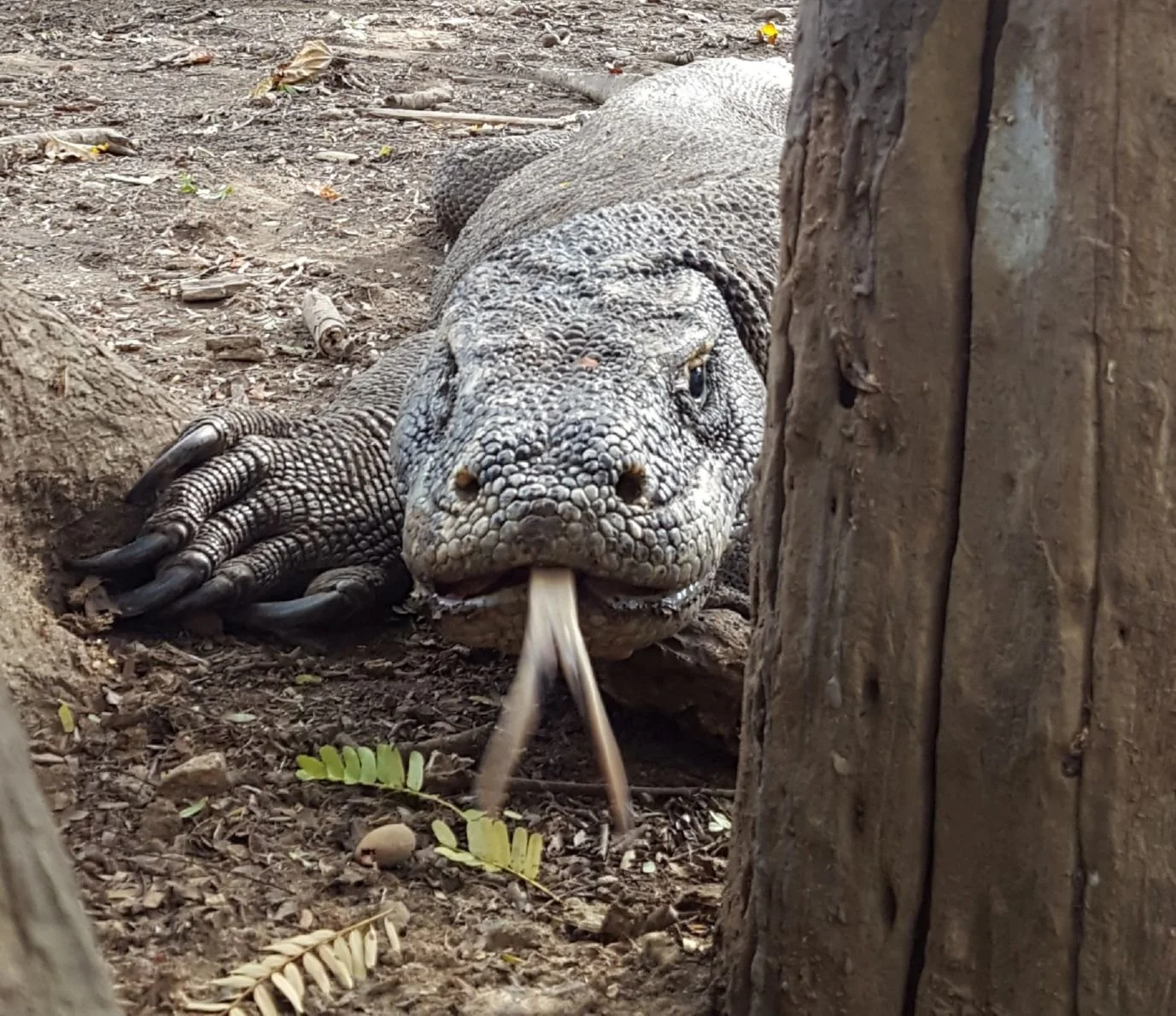
A Komodo dragon, close enough to see every detail—and every reason to keep your distance.
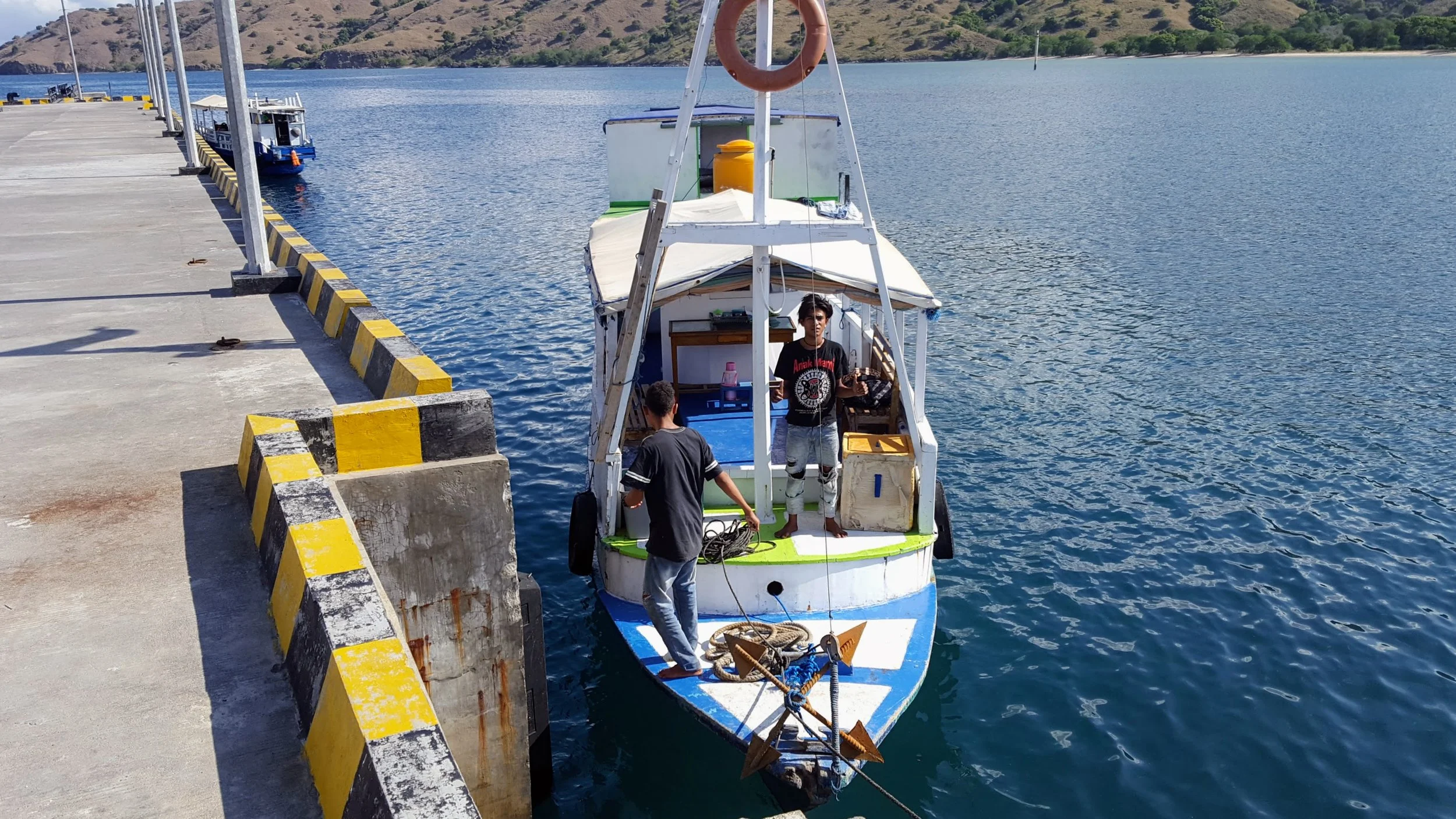
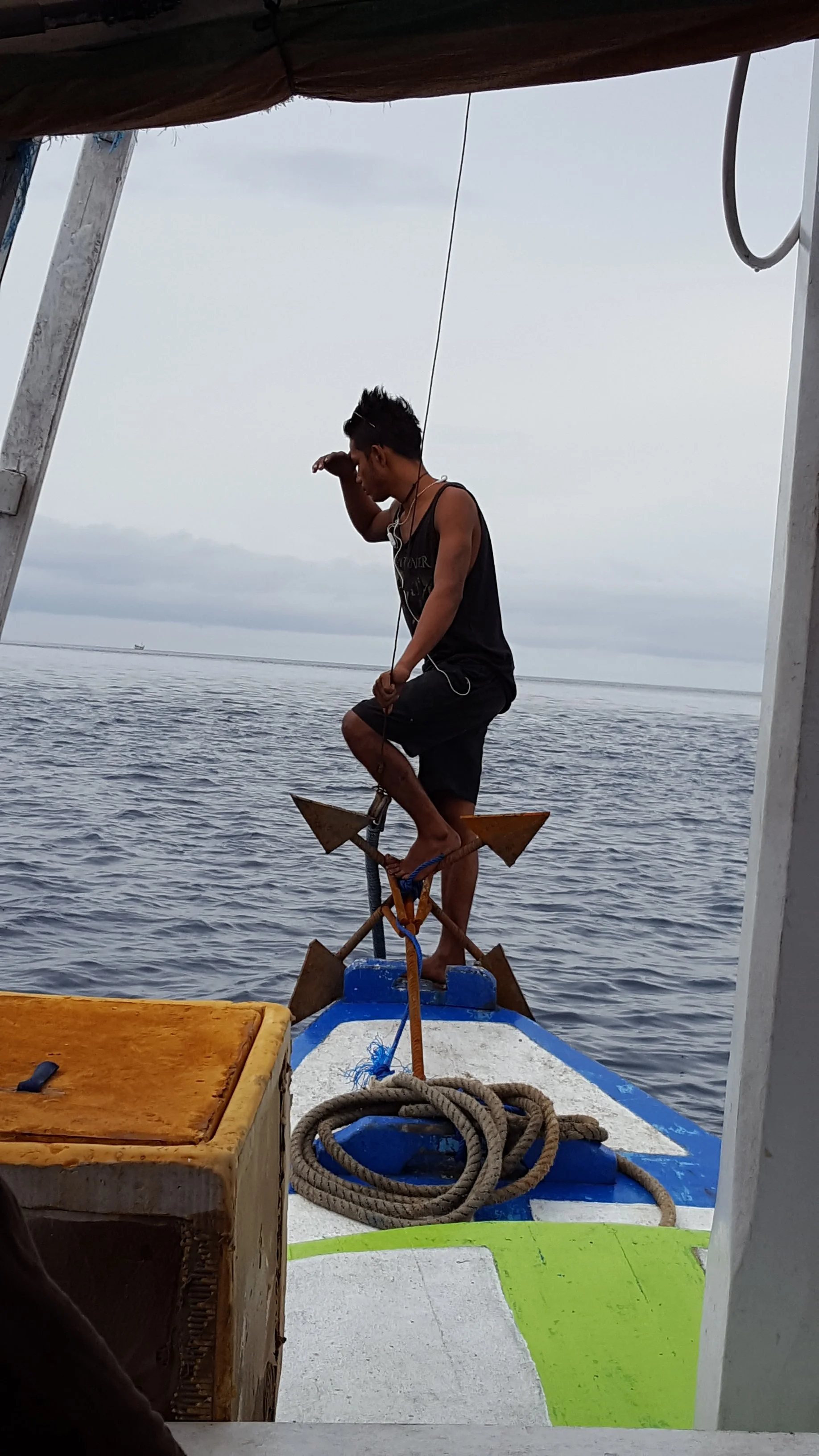
A small wooden boat, a young crew, and a quiet departure toward Komodo.
The boat left early the next morning, before the heat had fully settled in. The harbor was quiet—just a few boats moving slowly in and out, their engines breaking the stillness.
The vessel itself was small and weathered, built for function rather than comfort. A simple wooden boat that had clearly made this trip many times before.
The captain who was 19 years old, offered a brief greeting. His deckhand—no more than a teenager—moved easily about the boat, preparing lines and checking equipment with quiet efficiency.
Also on board was a young German couple, newly married and traveling together on their honeymoon. Aside from a few polite introductions, there wasn’t much conversation.
There was no formal briefing, no sense of ceremony.
Once aboard, the lines were released, and within minutes the shoreline began to drift away—leaving the last signs of town behind and setting a course toward the islands.
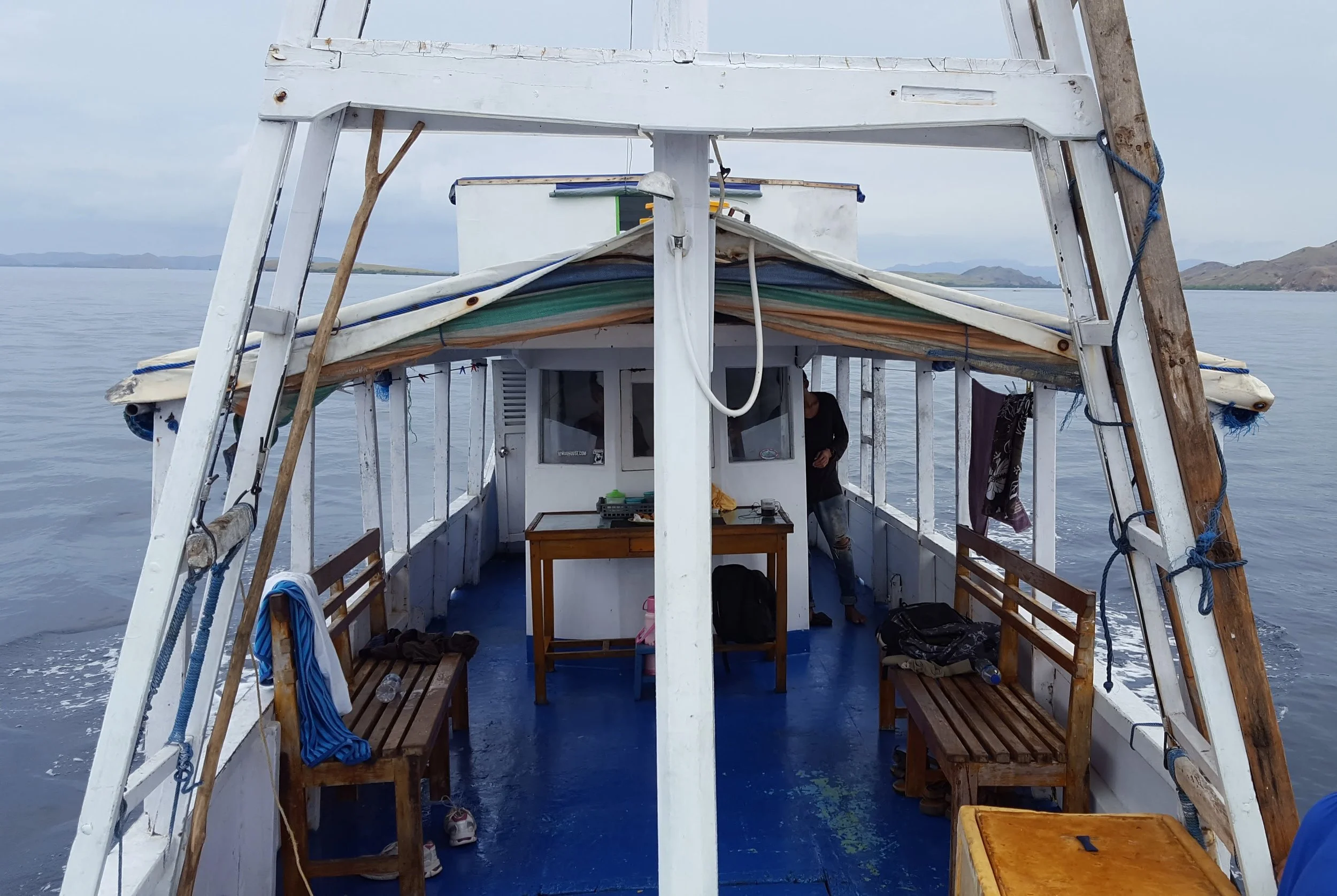
There was a small enclosed area near the stern of the boat—a simple pilot house with just enough space for the captain—but for everyone else, life was lived out on the open deck. By day, it was a place to sit and watch the islands pass. At night, it became a sleeping area under the open sky.
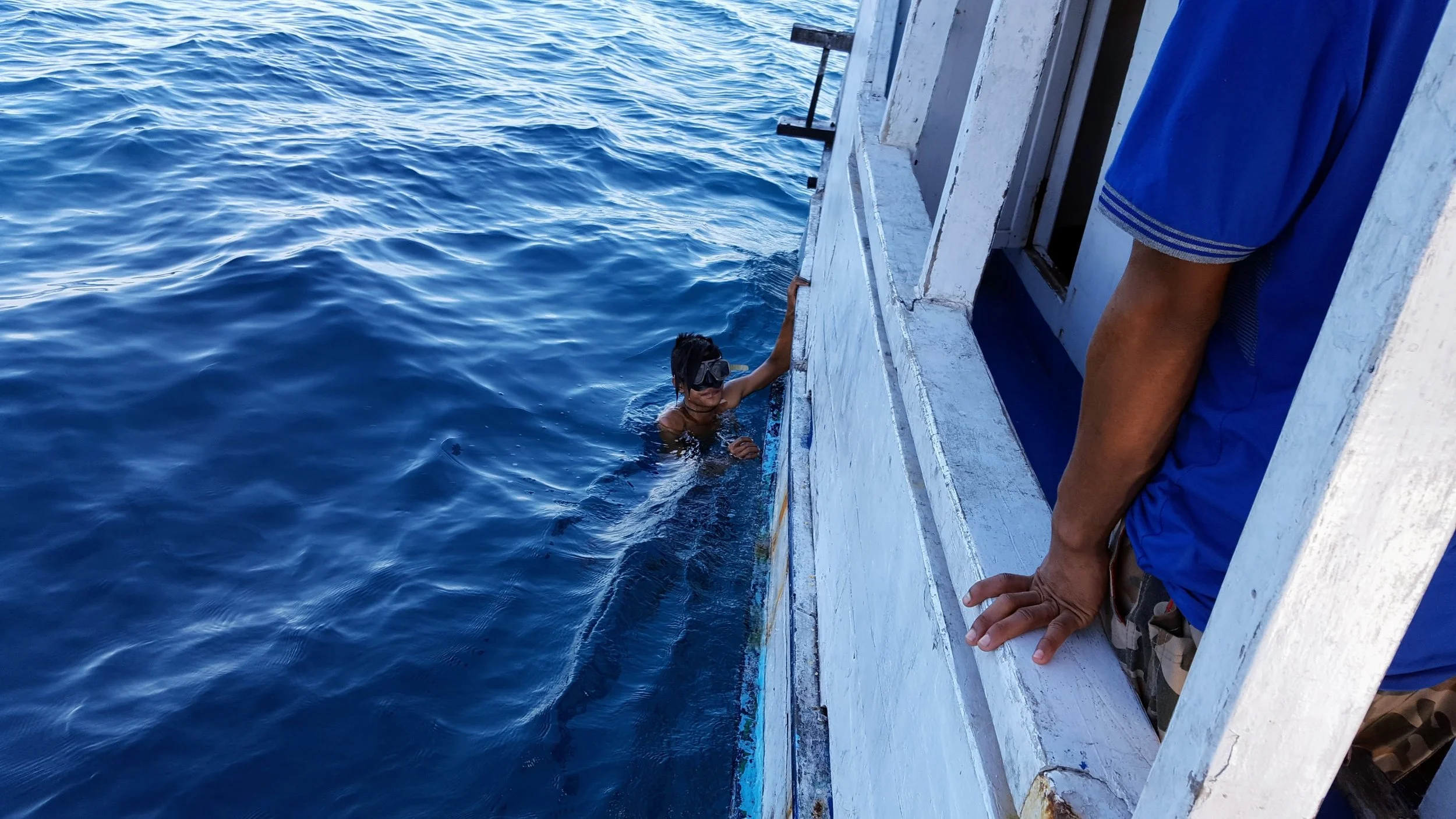
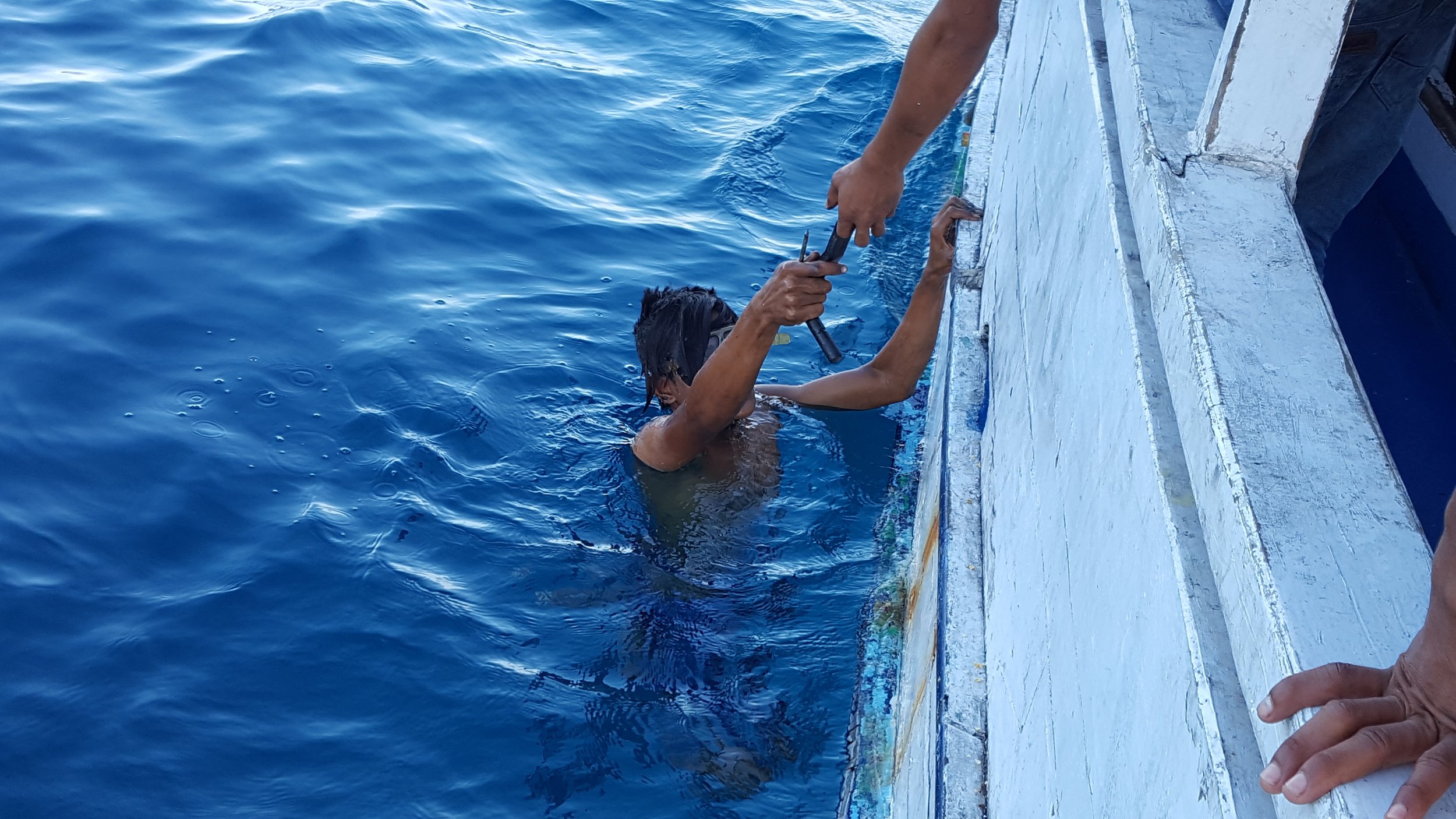
Not long into the trip, the steady rhythm of the boat began to change. At first it was subtle—a slight vibration that didn’t quite belong. Then it grew stronger, until it was impossible to ignore. The entire boat started to shake.
The captain cut the engine without hesitation. The sudden silence felt almost as unsettling as the vibration itself.
It didn’t take long to understand the problem. One of the propeller blades had broken off. With each rotation, the imbalance had been sending a harsh vibration through the shaft and into the hull.
There was no sign of concern, no discussion. The captain and the young deckhand simply went to work, taking turns diving beneath the surface while the other remained above, passing down tools and parts. From the deck, it was a strange scene—two figures disappearing, reappearing, exchanging tools, then vanishing again—moving with a steady, practiced rhythm. Piece by piece, the damaged propeller was removed and replaced with a spare they carried onboard.
Eventually, the engine came back to life. The vibration was gone. The familiar rhythm returned.
And just like that, the journey continued.
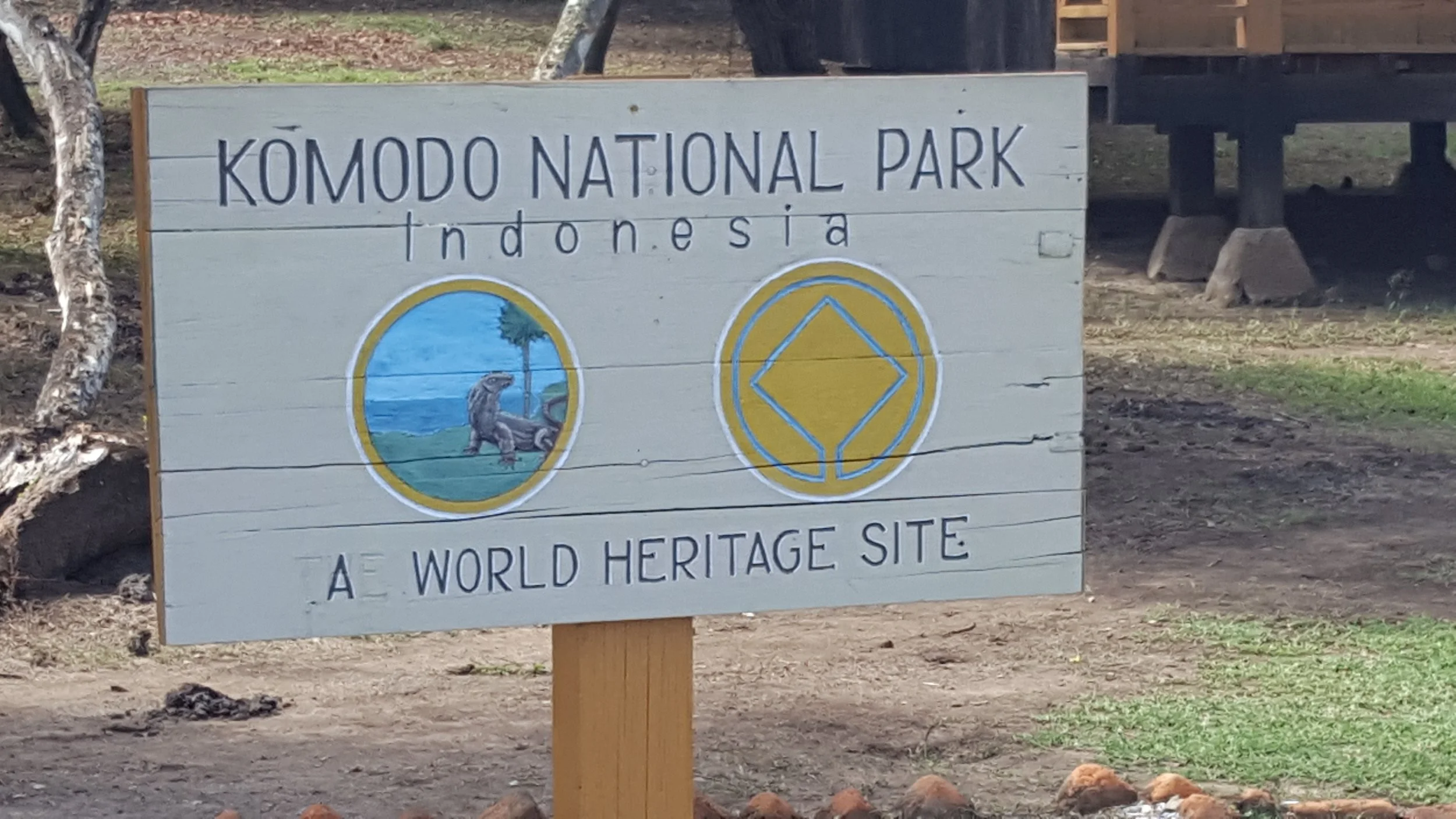
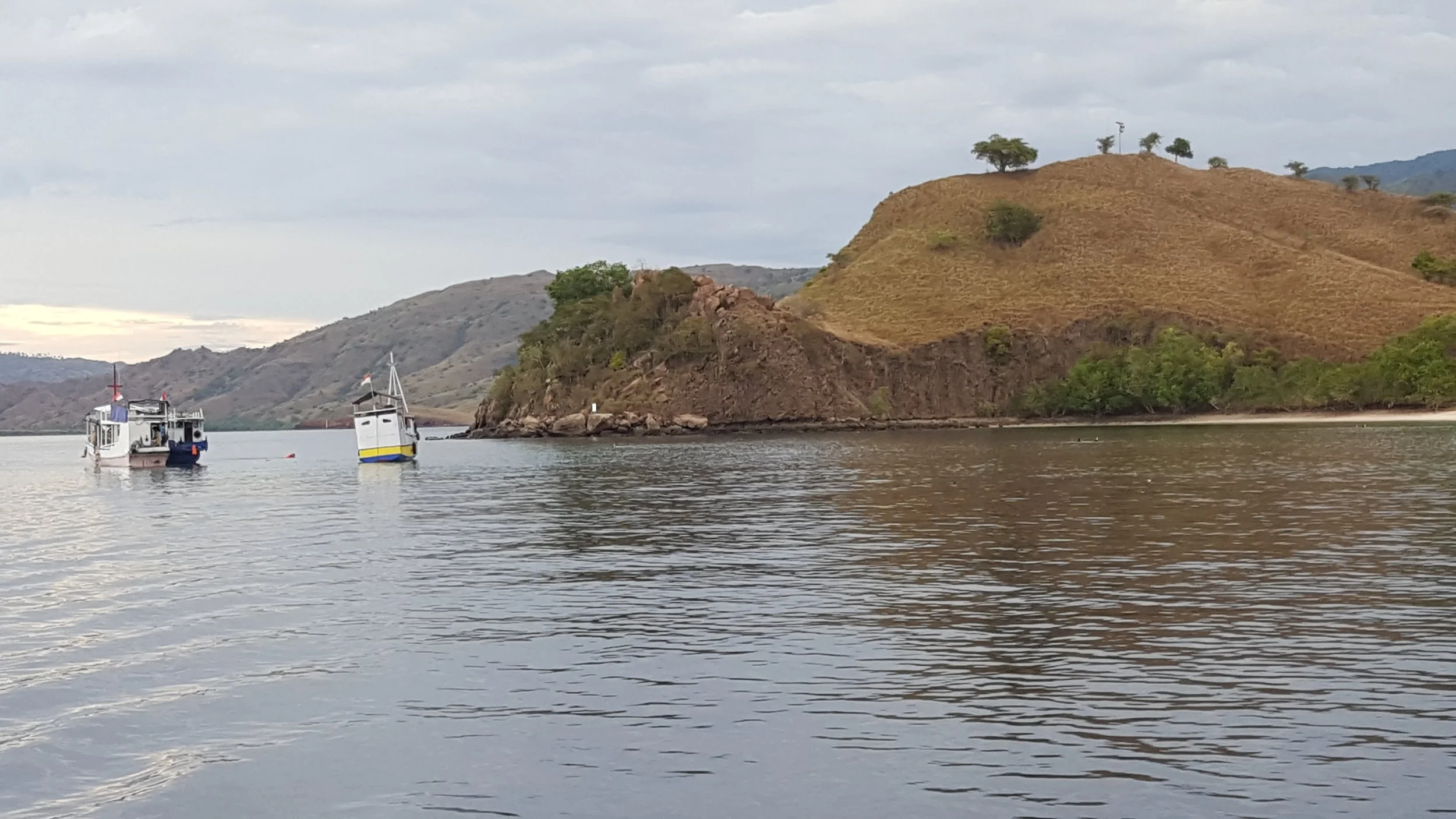
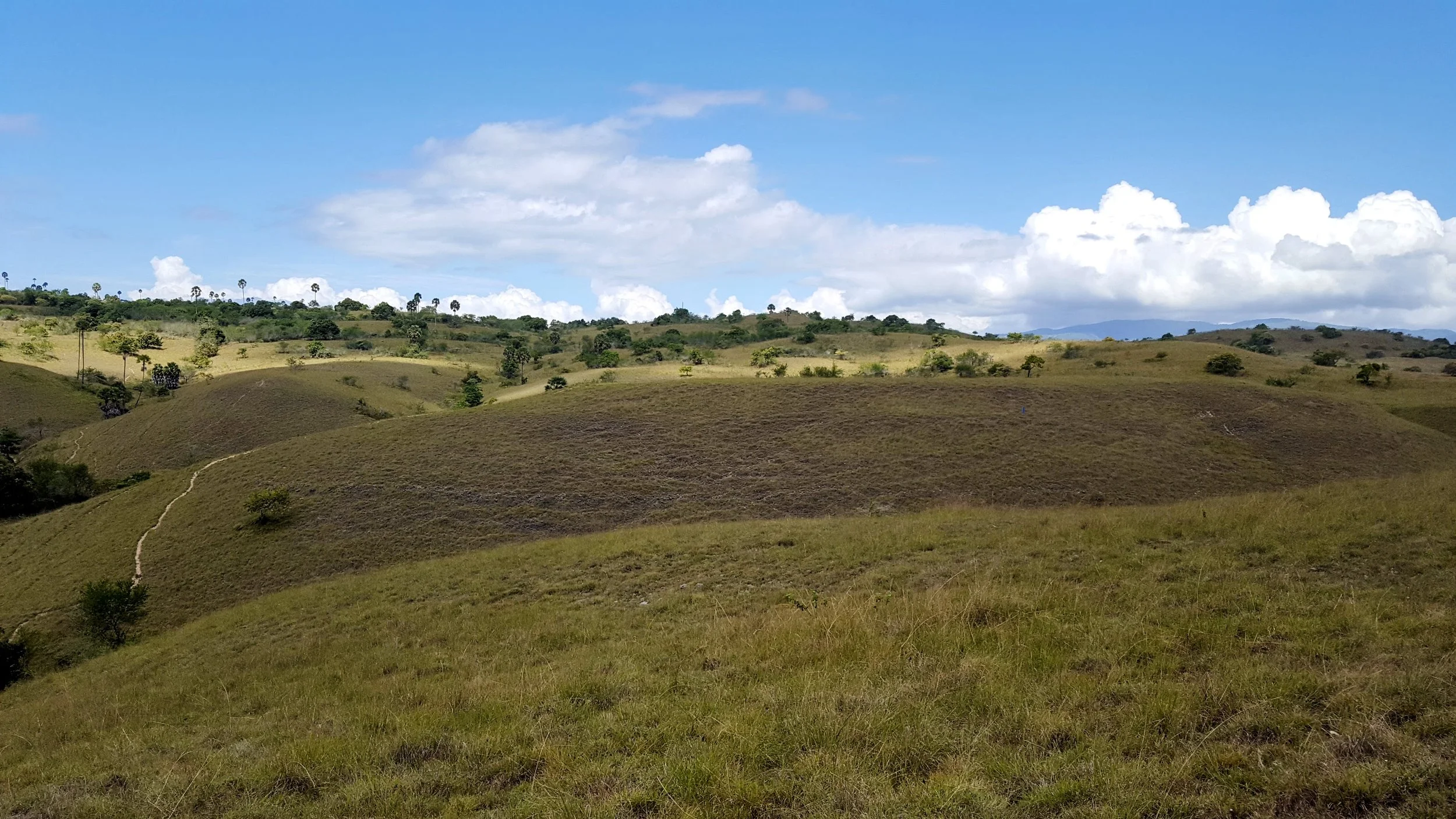
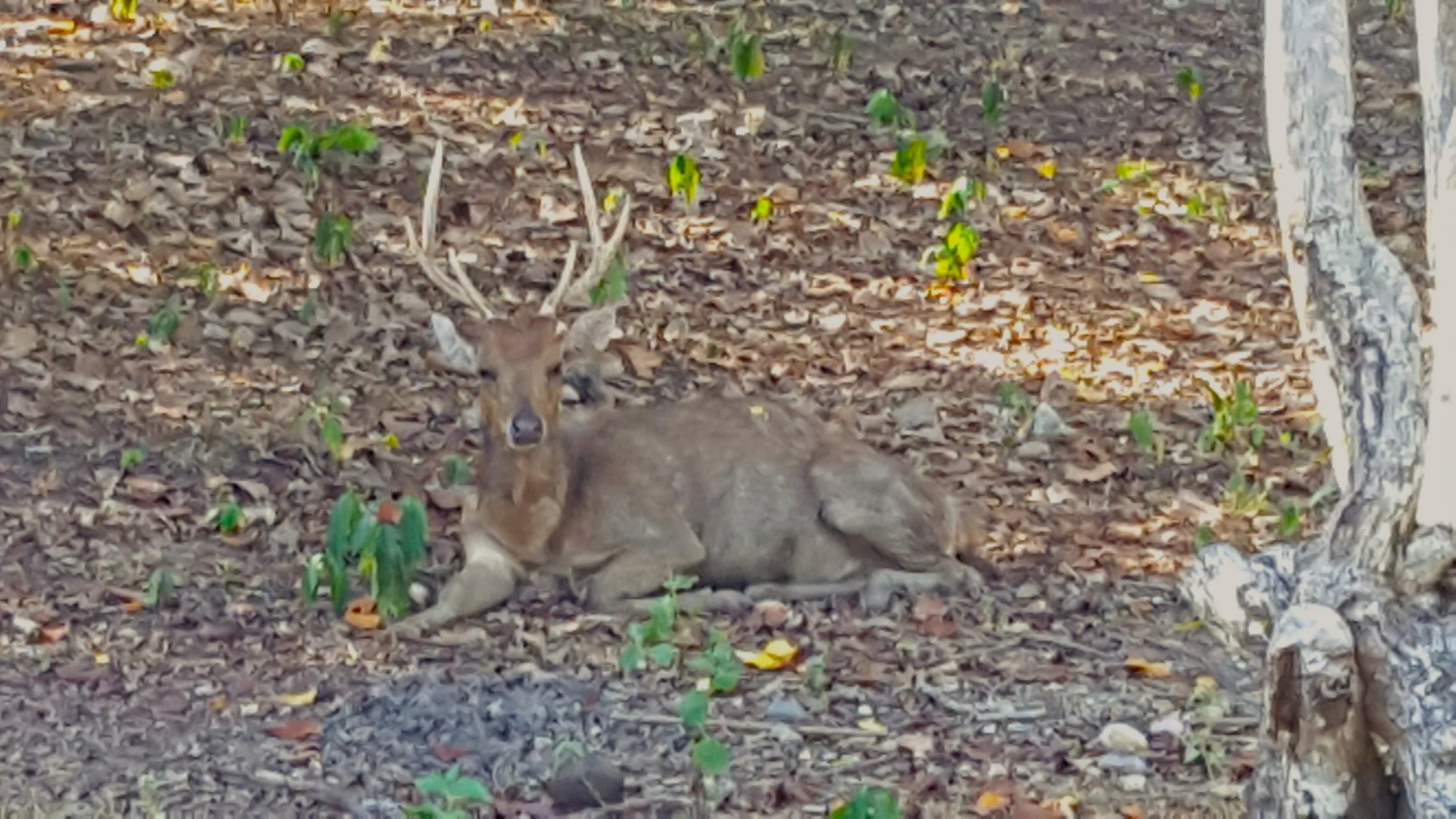
By the time the boat reached Komodo National Park, the landscape had changed noticeably. The islands were dry and rugged, covered in scrub and low trees, with long stretches of open ground broken only by scattered shade. It felt harsh, exposed, and perfectly suited to the animals that lived there.
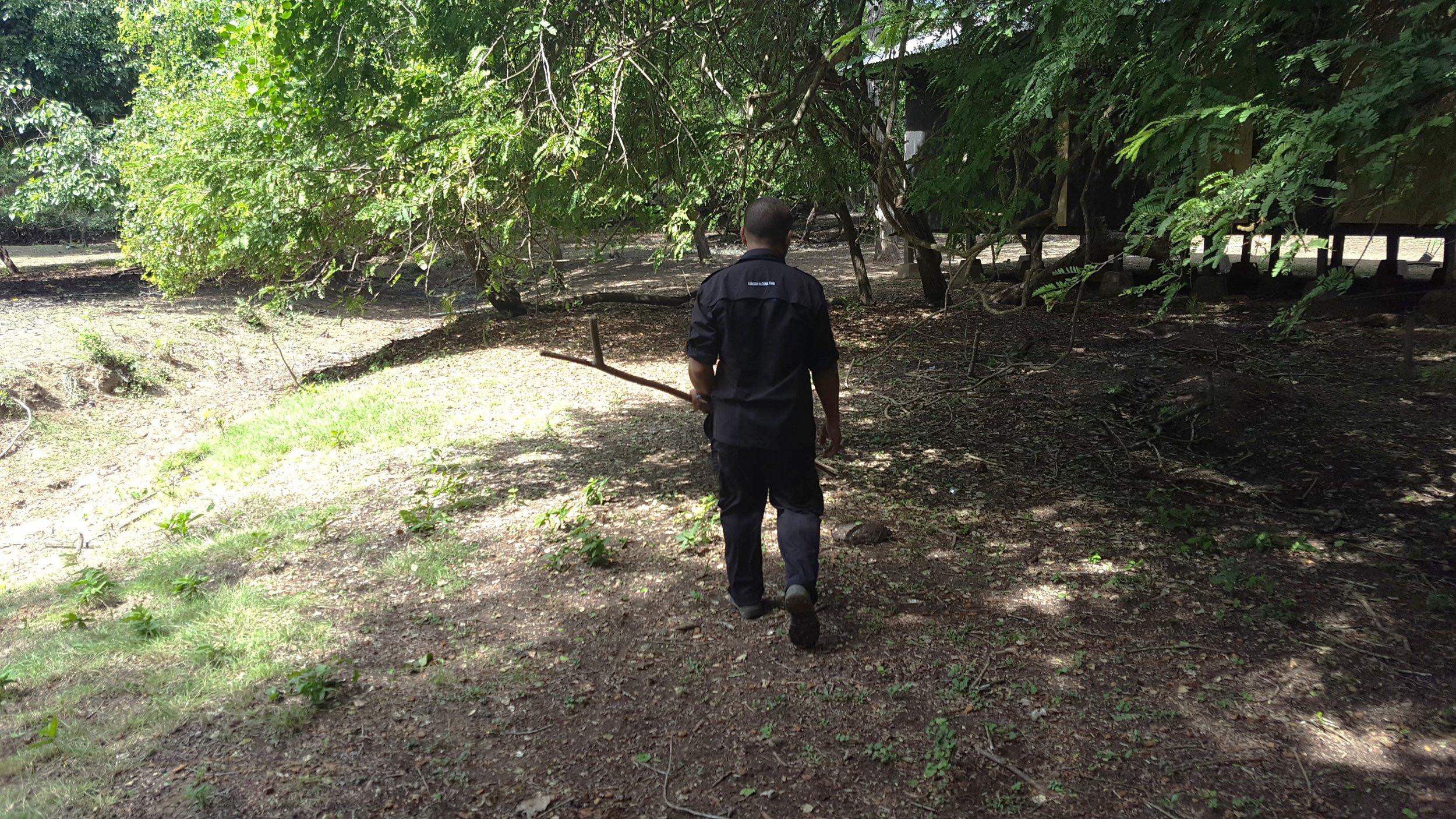
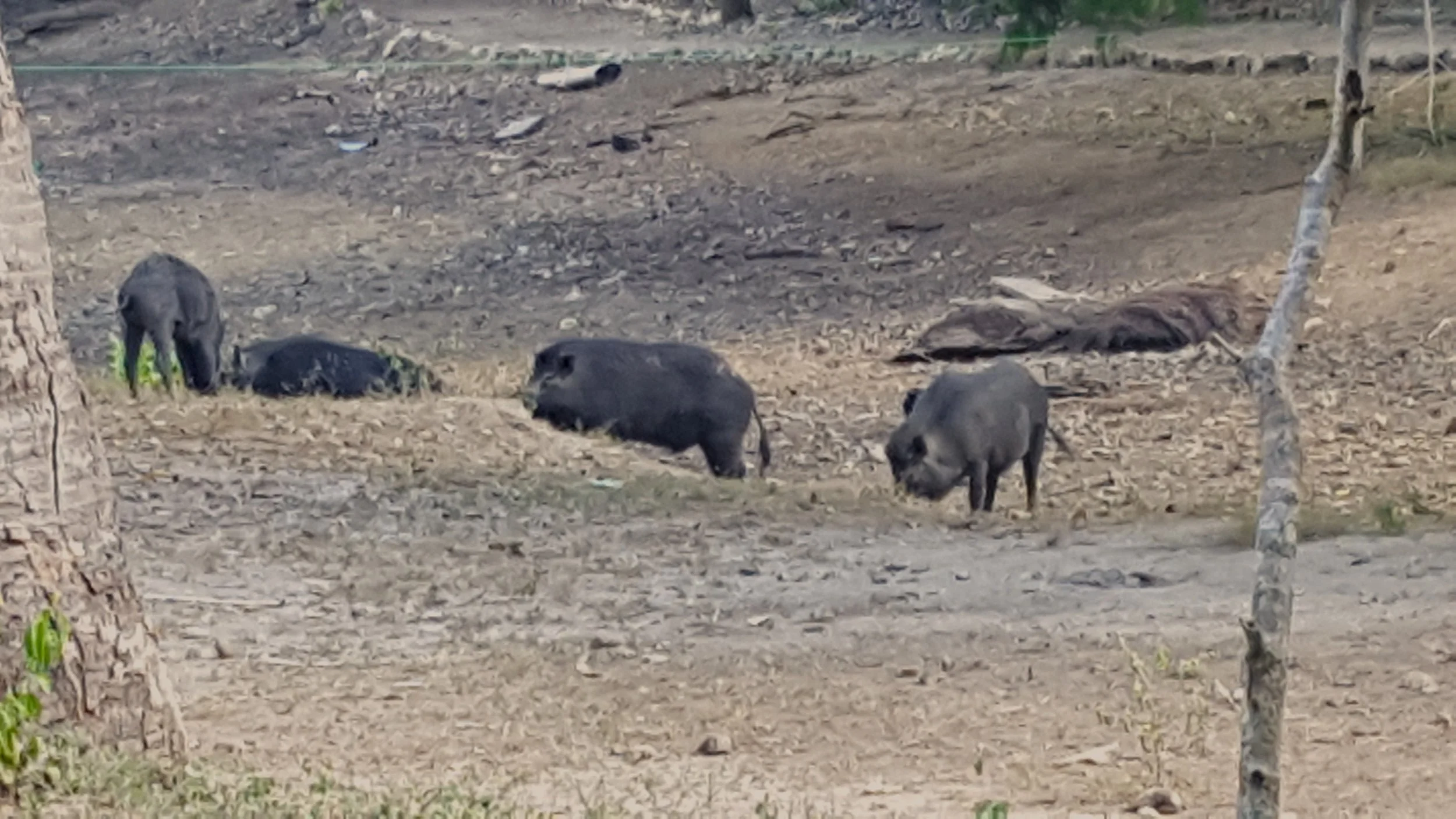
Visitors did not move through the park alone. Each group was accompanied by park rangers, local guides who knew the terrain and, more importantly, the behavior of the dragons. They carried long, forked wooden staffs—not as weapons, but as a way to keep distance if needed.
Komodo dragons are not fast over long distances, but they don’t need to be. They conserve energy, moving slowly and deliberately, often lying in wait along paths or near areas where food might appear. Their strength comes in short bursts—quick, powerful movements that can close distance faster than expected.
They are opportunistic hunters, feeding on deer, wild pigs, and occasionally water buffalo. But they are also scavengers, drawn by scent over surprisingly long distances. Even a small trace of blood is enough to change their behavior.
There are no fences, no barriers separating visitors from the animals.
The first sighting was easy to miss.
At a distance, it looked like part of the landscape—just another shape along the ground, blending in with the exposed roots of a tree.
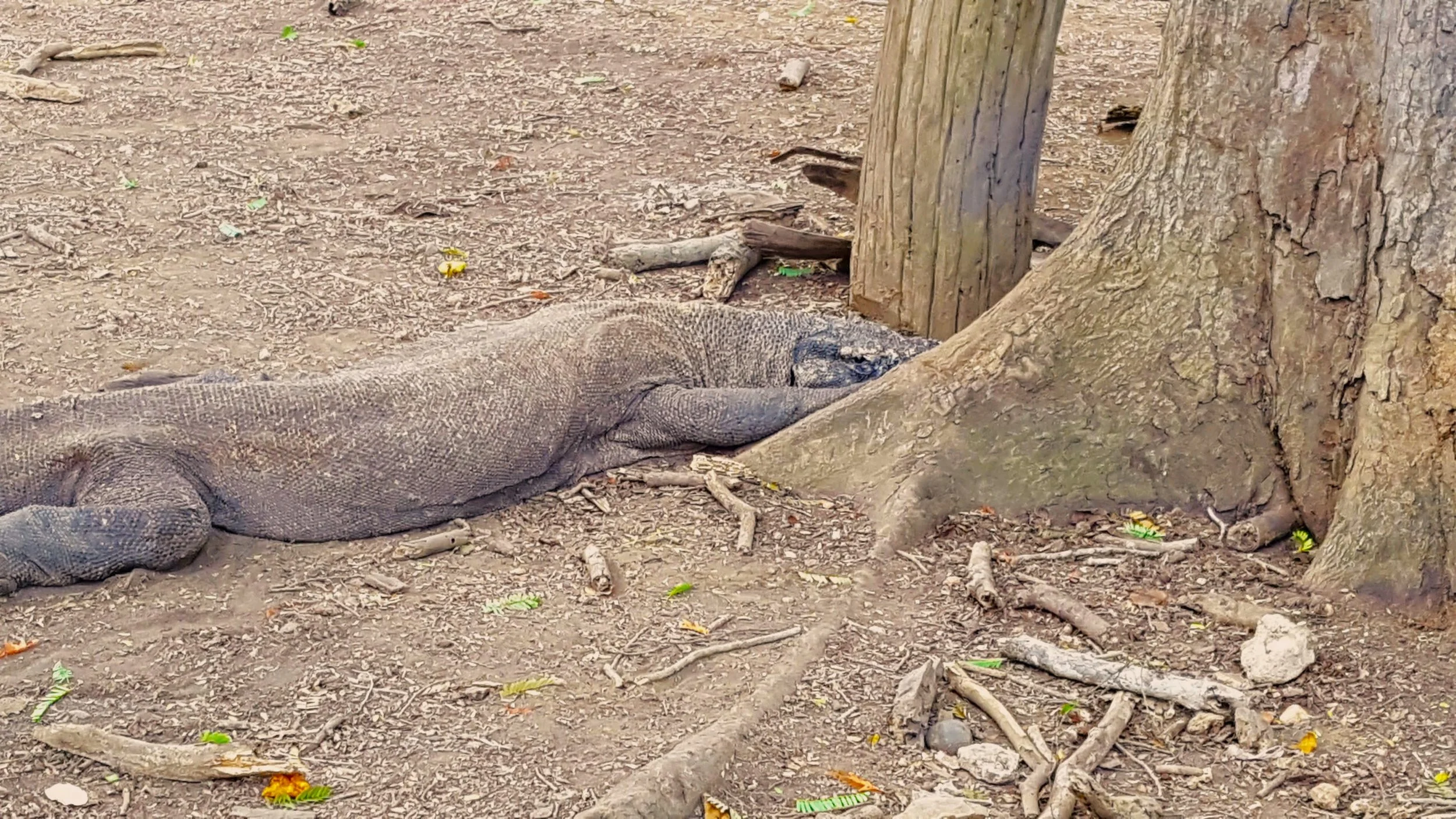
It wasn’t until taking a second look that the outline became clear. The curve of the body, the weight of it, and then the head—resting, but fully aware.
What had seemed like part of the terrain was something very much alive.
Then it moved.
Slow at first, almost deliberate—but with a presence that made it clear this was not something to underestimate.
Up close, the details became impossible to ignore.
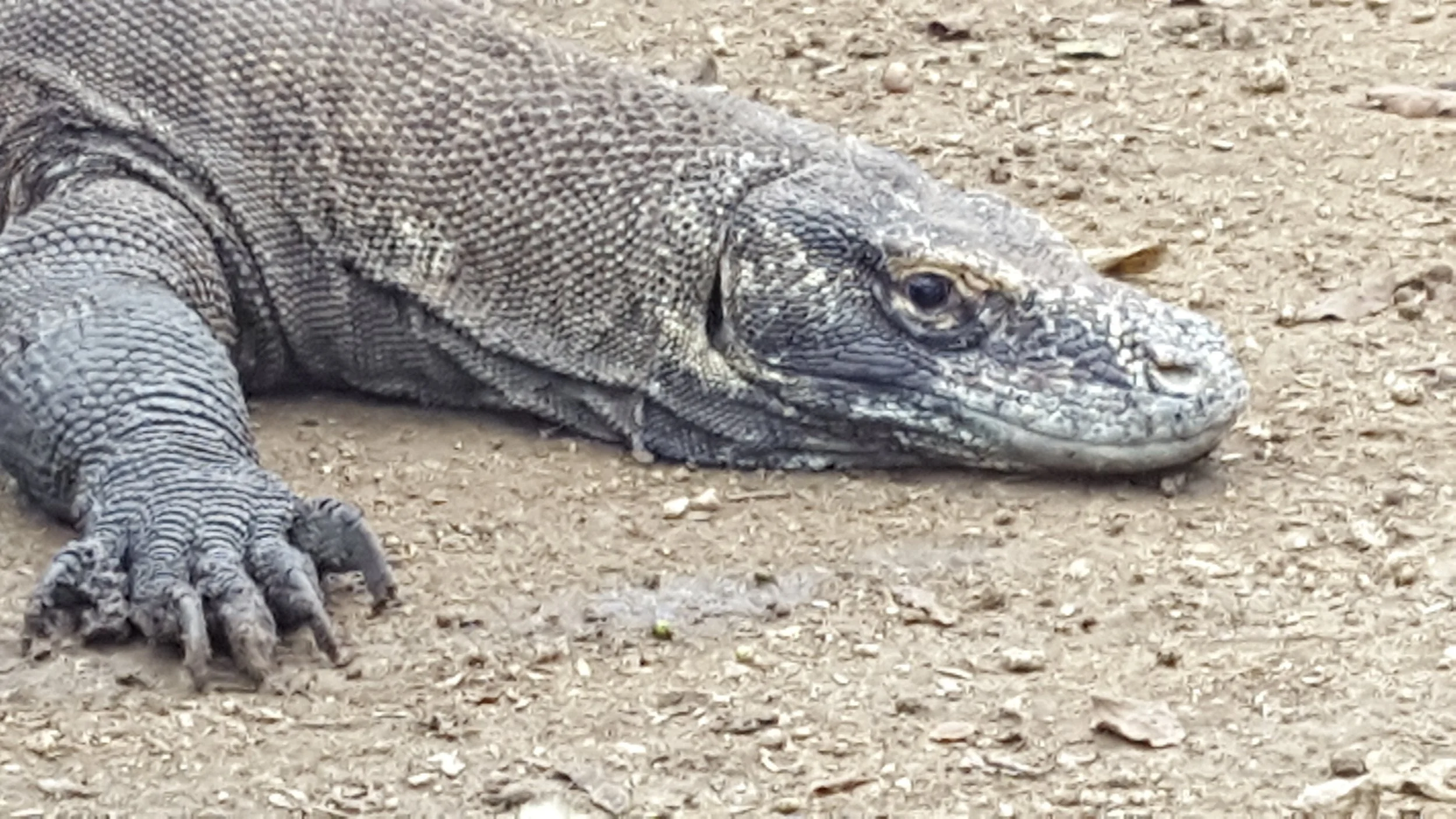
The skin looked more like armor than flesh—thick, textured, and worn by time. The claws, curved and heavy, built not for speed but for strength and control.
Nothing about it felt hurried. Every movement, every position, seemed deliberate.
At certain moments, under the guidance of the rangers, it was possible to get closer than seemed entirely reasonable.
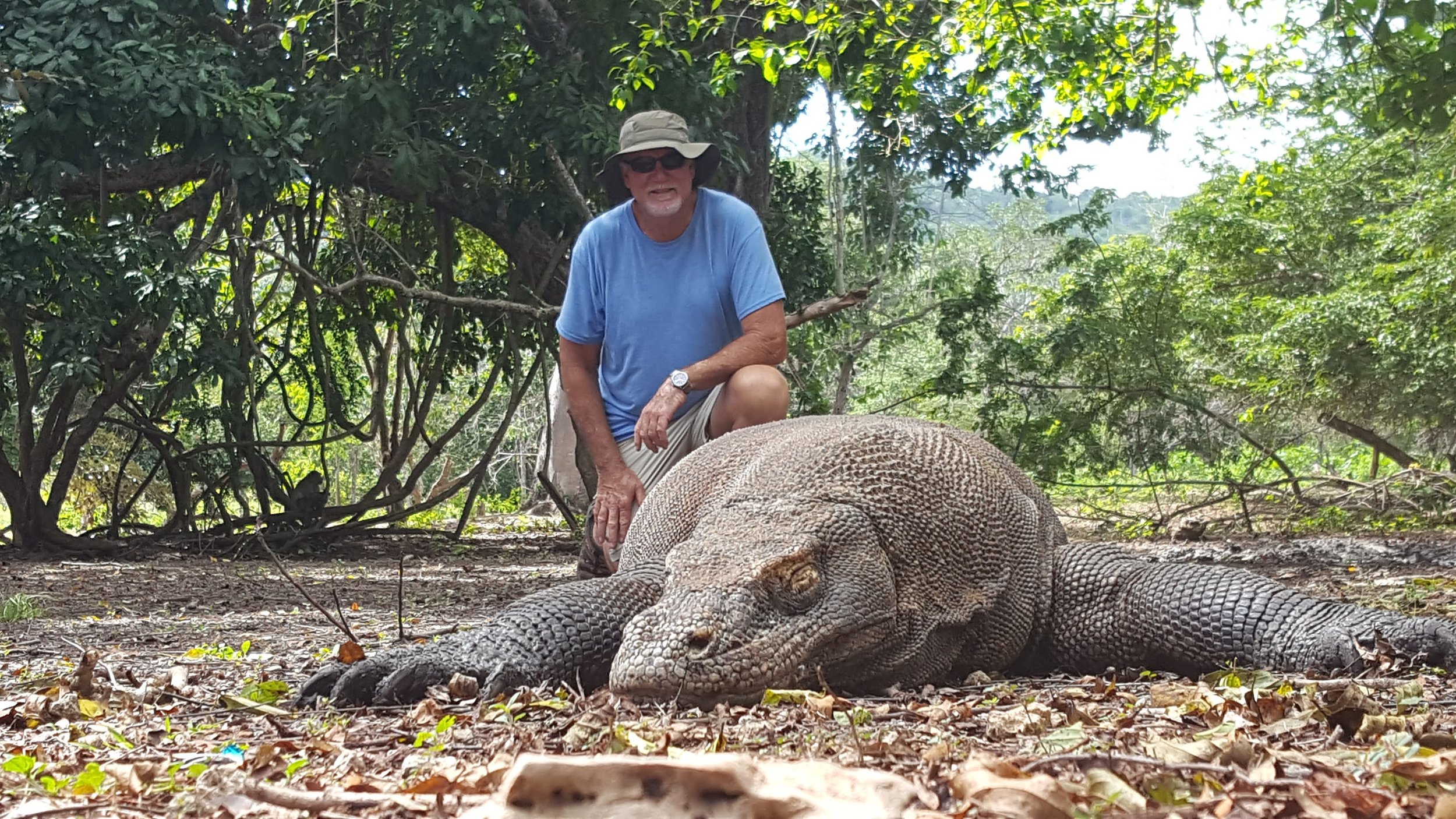
There were no barriers, no enclosures—just distance, awareness, and trust in the judgment of the ranger standing nearby.
Up close, the scale was unmistakable. The weight of the animal, the thickness of the body, the quiet stillness that could change in an instant.
It was not a staged moment. It was simply being there—close enough to understand what these animals really are.
Some experiences stay with you not because of where you went—but because of how close you were when you got there.
The return trip offered one last surprise.
Along the way, the boat slowed near a narrow stretch of water between two islands. Without much explanation, the captain pointed toward the surface. Moments later, dark shapes began to appear below—manta rays, moving effortlessly through the current.
There were no cameras ready, no time to prepare. Just a few quiet minutes watching them pass beneath the boat before the engine came back to life and the journey continued.
It wasn’t part of the plan—but like most things on this trip, it didn’t need to be.
Komodo was never just about seeing dragons. It was about the journey to get there, the simplicity of life on the boat, and the quiet understanding that comes from being close to something that still lives on its own terms. In a world where so much is controlled and predictable, this felt different—unfiltered, unscripted, and very real. Like so many of the moments that stay with you, it wasn’t about distance at all. It was about how close you were when it happened.
